


Page 50 - SA Fruit Journal VOLUME 14
P. 50
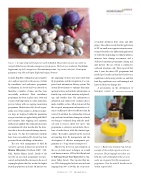
Figure 1. A range of topical fruit grown south of Bankok. The production area was under an integrated Bactrocera dorsalis management programme. The fruits are rambutan: Nephelium lappaceum (top left), mangosteen: Garcinia mangostana (top centre) sala fruit: Couroupita guianensis (top left) and logan: Euphoria longan (bottom).ed include deciduous fruit, citrus and table grapes. The authors noted that the application of SIT on small areas requires intensive moni- toring of fruit flies, the differential application of sterile flies depending on wild populations, intensive fruit damage assessments and a dedicated sanitation programme during and after harvest. The use of baits is confined to outbreak situations only. They reported that after 5 years the micro-SIT programme had yielded good results in that there had been a significant reduction in pesticide use and that fruit fly populations were well managed and harvested fruit was damage free.A presentation on the development ofSecurity, Republic of Mauritius) and a number of co-authors reported on the success of a fruit fly surveillance and eradication programme on Mauritius. B. dorsalis has been detected on Mauritius a number of times, and has been successfully eradicated. Their surveillance programme has been in place since 1994 and consists of the imposition of a strict eradication protocol along with an ongoing monitoring programme. On detection of B. dorsalis a quar- antine area (5 km radius) is declared, numer- ous traps are deployed within the quarantine area, protein baits are applied along with MAT and extensive fruit stripping and sanitation methods are applied. The eradication measures are maintained for four months after the detec- tion, this is due to the extended mango harvest- ing season. To date the eradication methods have been successful and B. dorsalis has been prevented from establishing on Mauritius.The area wide management of Med fly (Ceratitis capitata) in Israel was presented by Miriam Silberstein (Northern R&D / MI- GAL, Pardess-Hanna, Israel). Details of the need for an area-wide programme were pre- sented, and included the decrease in the use of organophosphates that has resulted in higher fruit fly populations in Israel. Of interest wasthe upgrading of their area-wide sterile fruit fly programme and the integration of a com- puter based information delivery system. The system allows farmers to optimize their man- agement actions and includes information on fruit fly trap catch, fruit maturity and phenol- ogy, and weather data. The information is submitted and collated; the resultant data is made available on line. Silberstein noted that the accepted management information is of- ten not sufficient to allow for effective fruit fly control. In addition the relationship between trap catch and actual fruit damage in orchards was being re-evaluated along with the meth- ods used to treat so-called “hot spots”. The programme is extensive and includes the re- lease of sterile flies in 8 000 Ha of mixed agri- culture. The author summed up the research surrounding fruit fly management and the development of effective management pro- grammes as a “ long, but necessary process”.Allied to the above was a presentation on the use of sterile insect technique on a small scale known as micro- SIT for Med fly in Israel by Gal Yaacobi and Yoav Gazit (Biobee, Ma- yanot Valley, Israel). They reported that mi- cro-SIT is being applied in four areas in Israel ranging from 300 -1 500 Ha, the crops treat-biological control ofCONTINUED ON PAGE 48TECHNOLOGY 47 FEB | MARCH 2015Figure 2. Bactrocera dorsalsis trap with an example of the methyl eugenol used as an attractant. The photograph was taken at a field day south of Bangkok within an area under an integrated fruit fly management programme. Note the male B. dorsalis on the methyl eugenol label.


