


Page 48 - SA Fruit Journal VOLUME 14
P. 48
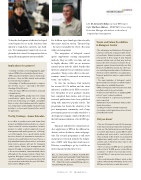
Trends and Future Possibilities in Biological Control• The advantages and limitations of biological control are viewed in comparison with chemi- cal pesticides. Natural predators are usually very specific in their range of prey. Natural enemies actively seek out their prey and can increase the level of control over time. The ar- guments against chemical pesticides are that they not only kill the pest, but also other spe- cies, including natural predators. Furthermore chemical control is limited to area application, frequent application may be required which are costly.• The main limitation of biological control agents is that it is a slow process which requires the predators to establish themselves.• EPNs as biological control measure have had excellent results in closed orchards.• Future research will focus on applying EPNs in local “open” orchard conditions.• 50% reduction in a given pest population can be expected• Elimination of pest individuals with possible chemical resistance• Seeding of orchard soil with nematodes• Secondary control against insects in soil such as fruit fly and weevilsDid you know?• The use of biological control for the manage- ment of pest insects pre-dates the modern pes- ticide era. The first historical record of biologi- cal control dates back to around AD 300 when predatory ants were used to control pests in citrus orchards. In the modern era an imported ladybird was widely used to control cottony- cushion scale on American citrus crops in Cali- fornia in the 1880s.• There are about 120 EPN species worldwide with a total of 26 EPN species on the African continent – of which 13 are new discoveries. In South Africa 7 new species have been de- scribed.• Also read Antoinette Malan’s article in this edition, A Rose by any other Name, about a new EPN species that was recently discovered.Implications for growers?• Currently scientists are investigating the appli- cation of EPN to the soil and directly onto trees.• EPN cannot be treated the same as chemical ap- plications – they are little animals and sensitive to environmental conditions.• Knowledge of handling nematodes is impera- tive for their success – especially a full under- standing of their life cycle.• There are major differences between aerial and soil applications.• When applying EPNs aerially onto trees certain considerations apply: Insects such as codling moth and mealy bugs are highly susceptible; there is only a short window period for applica- tion; temperature and humidity remain the main problems – as trees must stay wet before and af- ter application.The Big Challenge - Grower EducationIn an effort to produce more and better fruit, growers worldwide prefer pesticides as a means of pest control. It’ s not an easy task to convince growers to adopt a systems approach to pest management and make greater use of biologi- cal control agents. Once a good natural enemy has been found, it is important to train the ex- tension service and farmers in its use. There is a big attitudinal barrier that needs to be broken down before growers will opt for biological control agents. Future pest management will depend strongly on biological control because is the most sustainable, environmentally safest, although not the cheapest system of pest man- agement. Biological control is expected to ac- count for a significant increased proportion of all crop protection methods by the year 2050 (Bale, Van Lenteren & Bigler, 2009).Bale, J.S., Van lenteren, J.C. & Bigler, F.(2008): Bio- logical Control and Sustainable Food Production, Royal Society London Biol Sci.363(1492):761- 776 http://rstb.royalsocietypublishing.org/con- tent/363/1492/761.abstractToday the development of effective biological control agents for use in the deciduous fruit industry is regarded as a priority, says Addi- son. “Pest management cannot rely on a sin- gle method of control. It is imperative that we expand the management options available.”Left: Dr Antoinette Malan our local EPN expert. Right: Matthew Addison – HORTGRO Science Crop Protection Manager who believes in the value ofintegrated pest management.For Addison a good analogy is that of a table that cannot stand on one leg. “The more legs - the more sustainable the object. The same with pest management."The integration of biological control agents supplements existing management methods. They are stable over time and can be highly effective. EPN are an attractive natural option with the added benefits that they have adapted to local conditions and are generalists. Their positive effect on the envi- ronment cannot be measured in monetary terms," says Addison.To date the deciduous fruit industry has invested R 2.74 million and the citrus industry 1.2 million in the EPN research ef- fort. Altogether 10 post graduate students have completed their studies, and a 38 peer reviewed publications have been published along with numerous popular articles. The programme has drawn the attention of the pest management community, and a huge government grant was recently awarded to a development company, which will allow for the full commercialization of local EPN spe- cies.This grant will allow for commercial out- door application of EPN in the different in- dustries such as deciduous, citrus and grape- vine. The research programme is still active and proposed research includes the integra- tion of EPN with fungi that attack insects. If history is anything to go by, it will be an interesting and productive process.TECHNOLOGY 45 FEB | MARCH 2015


