


Page 74 - SA Fruit Journal VOLUME 14
P. 74
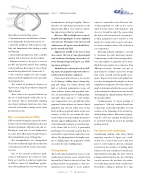
the packhouse and develop spores.• Constantly monitor concentrations of sanitis- ers in dump tanks, descaler water, rinses, etc.• Spray the packhouse with sanitisers regu- larly and immediately after finding a single mouldy fruit.• Spray trailers/picking bins with a suitable sanitiser before they leave for the orchard.• Transport cartons to the ports as soon as possible and prevent packed fruit standing on the packhouse floor where it is hot. Green mould develops faster at 10°C than at 4.5°C.• Store retention samples for each consign- ment and check regularly for waste and other developing factors.The control of postharvest diseases on export citrus using the postharvest fungicide thiabendazole:There seems to be a general reduction in the use of thiabendazole within the SA cit- rus industry. This is particularly alarming since latent pathogen infections have been observed in abundance during recent citrus production seasons.Why use thiabendazole (TBZ)?TBZ was the first fungicide registered (1960s) for the control of the Penicillium moulds and the latent pathogens, Diplodia stem-end rot, Phomopsis stem-end rot and Anthracnose on citrus fruit. TBZ and benomyl belong to the benzimidazole group of fungicides.The benzimidazoles are distinguished from other traditional fungicides in that they control diseases both by contact and system- ic action.Due to the extensive preharvest appli- cation of benomyl for the control of citrus black spot and the postharvest application of TBZ for control of Penicillium, popula- tions of Penicillium that were resistant to thebenzimidazoles developed rapidly. There is therefore an unfortunate perception in the industry that TBZ is of no value in control- ling important postharvest pathogens.However, TBZ is still effective in control- ling the latent pathogens on citrus: Diplodia stem-end rot, Phomopsis stem-end rot and Anthracnose. All export citrus should there- fore be treated with TBZ.Application of TBZ in the wax to fruit also reduces the risk of some physiological rind conditions developing on sensitive cul- tivars during storage and export, e.g. Chill- ing injury, pitting etc.Guidelines for reducing the risk of chill- ing injury on grapefruit exported under ex- tended cold sterilisation conditions:Citrus in general is known to be sensitive to cold damage (chilling injury) during ship- ping and storage, but certain cultivars, with light or yellowish pigmentation (some soft citrus cultivars, lemons and grapefruit varie- ties), are particularly prone to chilling injury, especially when exposed to “cold sterilisa- tion” temperatures. It is especially the yellow pigmented citrus cultivars viz. lemons, Marsh grapefruit, and even the yellow areas of Star Ruby and Rose grapefruit which are the most sensitive, as they do not contain the carot- enoids which act as anti-oxidants that protect the fruit against chilling injury. The extended cold sterilisation treatment, as recently adopt- ed by China (24d at -0.6°C), is particularly problematic. It is generally accepted that it is not feasible to export lemons under these con- ditions. Though grapefruit is also highly sensi- tive to chilling injury, the application of TBZ can reduce the risk of chilling injury.Picking windowThe South African grapefruit season, in the traditional production areas, extends from the middle of March to the end of June. The picking window for grapefruit is often ma- nipulated in an attempt to access marketsearly or to extend the season. However, har- vesting grapefruit too early in the season, when the fruit rind is still “immature” and also at or beyond the end of the season when the fruit is well coloured and “very mature”, is when grapefruit is most sensitive to cold injury. It is a major risk to export such sensi- tive fruit to markets where cold sterilisation is a requirement.Thorough maturity indexing is essential to determine the ideal harvesting window. Commencing 5 weeks before anticipated har- vest, pick samples of grapefruit (20-25 fruit). Mark the representative trees (data trees from different rootstocks, selections, tree ages or microclimates). Evaluate and record average fruit colour and full internal quality assess- ments. Repeat every week until optimal har- vest date, ensuring that the samples are drawn similarly for comparison. Plot the results on a graph to determine whether the season is early or late compared to the previous year, thereby determining the optimal picking window for the specific cultivar.Commencement of export packing of grapefruit to “cold steri” markets should start 14 days later, as the rinds will still be too cold sensitive at the beginning of the normal op- timal picking window. Harvesting of grape- fruit for “cold-steri” markets should also not be extended beyond the end of the optimal picking window.Post-harvest wilt conditioningConditioning (wilting) trials where Marsh grapefruit (exported to Japan) was “condi- tioned” for 2, 4 and 6 days at 16°C and 20°C prior to cold treatment, showed a dramatic reduction in the incidence of chilling injury relative to the non-conditioned control fruit. Unfortunately extending the time between packing and introduction into the cold chain can also increase the incidence of posthar- vest rind pitting and decay in sensitive fruit. Nonetheless, wilting at ambient for 7 daysFigure 2. Taking soil samples.TECHNOLOGY 71 FEB | MARCH 2015


